Here’s a thought experiment: imagine it’s 2045, and you look back at 2024. You probably won’t remember it for a particular political event or a hit song. You’ll remember it as the year AI stopped being a novelty and became the invisible hand shaping your everyday reality. Not a robot butler\u2014something quieter and more woven into everything you do.
Artificial intelligence isn’t a distant sci-fi idea anymore. It’s the quiet co-pilot in your car, the unseen editor smoothing your emails, the personal shopper living in your phone, and the diagnostic partner in your doctor’s office. It’s not really about machines replacing us\u2014it’s about machines augmenting us, reshaping daily life from the ground up. Here’s how that’s already happening, and where it’s headed.
From Tool to Environment: A Shift in How We See Tech
We used to think of technology as tools we pick up and use\u2014a hammer, a computer, a phone. AI is different. It’s turning into the environment itself\u2014an intelligent layer that anticipates, personalizes, and automates the world around us. We’re moving from a “search and click” internet toward a “predict and provide” reality.
This isn’t about one gadget\u2014it’s a genuine shift in how we interact with information, services, and even each other. Here’s where that invisible hand is already at work.
The Personalized World: Built Just for You
AI’s most immediate impact is hyper-personalization\u2014moving us away from one-size-fits-all toward experiences designed for an audience of exactly one.
1. Generic Experiences Are Fading Out
- Health and wellness: Your fitness tracker (Fitbit, Whoop) doesn’t just count steps anymore\u2014it uses AI to analyze sleep patterns, heart rate variability, and activity to suggest personalized recovery windows, ideal workout intensity, and even flag potential illness before symptoms show up. Soon, nutrition apps may cross-reference gut microbiome data with your grocery list to suggest meals tailored to your body specifically.
- Media and entertainment: Netflix and Spotify’s recommendation engines are early ancestors of what’s coming. Future AI will generate dynamic, personalized content outright\u2014imagine a movie whose plot subtly shifts based on your measured emotional reactions, or music that blends genres live to match your current mood and activity.
- Shopping: Browsing may become optional. AI shopping assistants, already appearing in apps like Amazon and Temu, are evolving into genuine digital stylists. They’ll know your size, your aesthetic, your ethical preferences (“no leather”), and your budget, and will proactively put together full outfits or decor schemes for your approval.
2. A Home That Gets Ahead of You
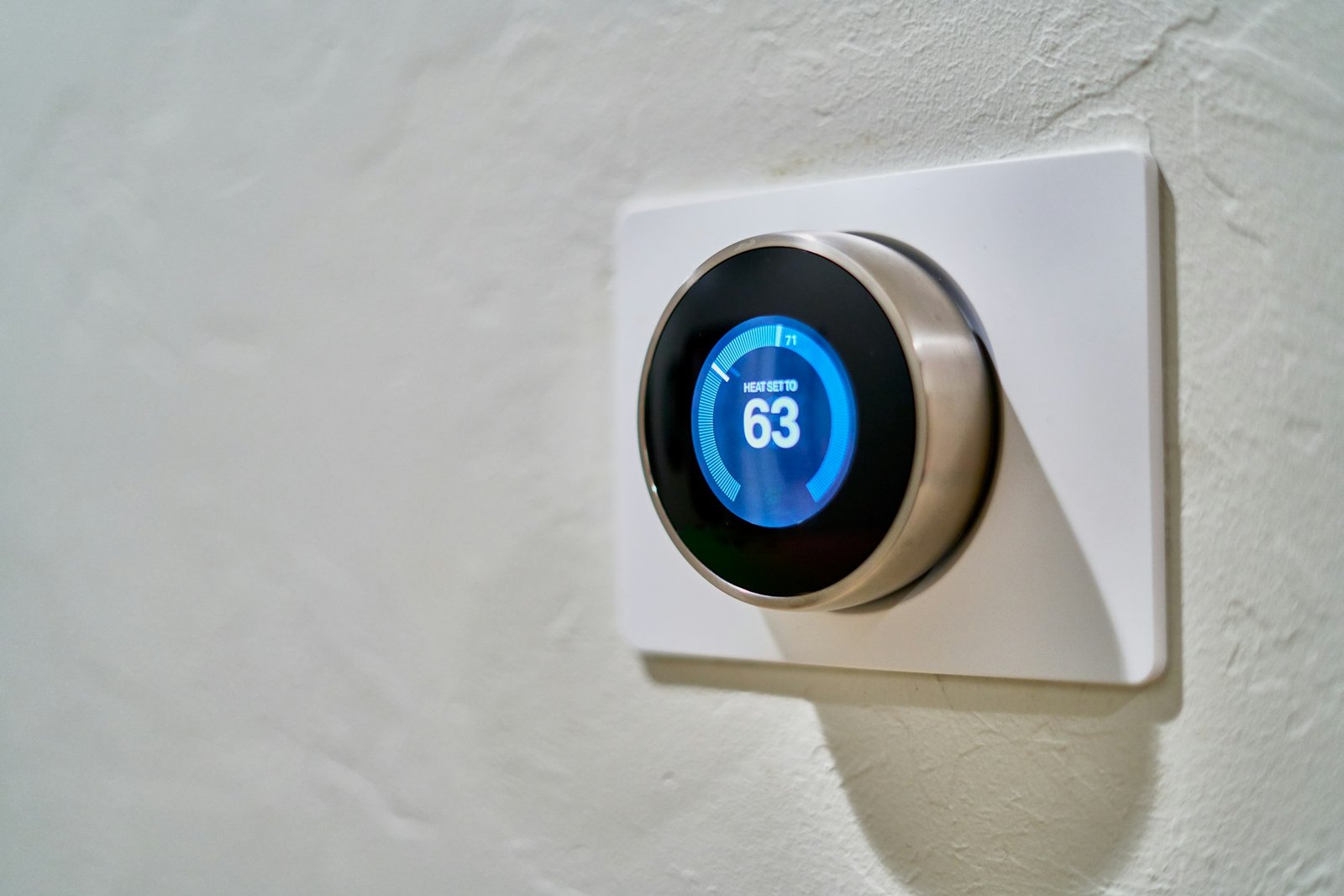
Your smart home is essentially getting a brain transplant\u2014moving from responding to commands to anticipating what you’ll need.
- Context-aware automation: Rather than just turning lights on at 7pm, your home AI could sense you’ve had a stressful day (through tone in your calls, or a faster walking pace) and pre-warm the bath, dim the lights, and queue calming music before you’re even through the door. It could notice you’re prepping a complicated recipe and pull up a tutorial on the kitchen display automatically.
- A health-conscious mirror: Smart mirrors with built-in cameras (like the one from NuraLogix) could use AI to scan facial skin tone and micro-expressions for subtle signs of stress, fatigue, or early cardiovascular issues, gently suggesting a check-up.
A New Way of Interacting With Technology
How we control our world is shifting from taps and swipes toward conversation and a glance.
3. Talking to Technology Like a Person
Large language models like ChatGPT are essentially training wheels for a future where talking to technology feels as natural as talking to a friend.
- Beyond simple questions and answers: You might debate ideas with an AI to sharpen your own thinking, co-write a complex legal document by describing your intended outcome, or get a full contextual summary of everything you’ve discussed with a company before you even dial their support line. Your assistant will understand intent behind vague requests\u2014something like “plan something fun and affordable for my parents’ visit next weekend”\u2014and research, book, and schedule it all on its own.
4. Blending the Digital and the Physical
AI will power a much smoother mix of digital and physical experiences.
- Real-time translation: AR glasses (Meta’s Ray-Bans, a future Apple Vision Pro) could overlay live subtitles on a conversation happening in another language, or translate a restaurant menu the instant you look at it.
- Visual search and memory help: See a plant you like? Your glasses identify it and tell you how to care for it. Can’t remember where you parked? Your AI replays a visual clip from your own point of view to guide you back.
The Quiet Infrastructure Behind Everything
Some of AI’s biggest impact happens completely in the background, optimizing systems we rely on but never really see.
5. Smarter Cities and Logistics
- Traffic and power grids: AI can dynamically adjust traffic light timing in real time to ease congestion, and balance loads on the power grid to integrate renewable energy more efficiently\u2014cutting your utility bill and your carbon footprint without you doing anything at all.
- Faster, smarter delivery: AI managing fleets of autonomous delivery robots and drones can find the most efficient routes on the fly, cutting delivery times and costs for everything from groceries to medication.
6. Expertise Becomes More Accessible
AI is turning into a genuine equalizer of knowledge.
- Education: AI tutors offer infinite patience and personalized lesson plans that adapt to each student’s learning style in real time.
- Creative and professional work: Tools like Adobe’s Firefly for images or GitHub Copilot for code act as force multipliers, letting anyone prototype an idea, design a logo, or write software with an expert-level co-pilot at their side, lowering the barrier to creating things.
The Challenges Worth Taking Seriously
None of this comes free of real challenges we’ll need to navigate:
- The privacy tension: Truly personalized AI needs deep access to your data. Where’s the line between helpful and invasive, and who actually owns your digital footprint?
- Algorithmic bias: If AI shapes so much of our world, bias baked into its training data can reinforce or even amplify existing inequalities in hiring, lending, and law enforcement.
- Skills fading over time: As AI takes on more cognitive tasks\u2014navigation, analysis\u2014our own muscles for those skills could atrophy if we’re not deliberate about it.
- Shifting jobs: AI will create new kinds of work even as it makes other jobs obsolete, which means society needs serious investment in retraining and adaptation.
Wrapping Up: A Partnership, Not a Takeover
AI isn’t a wave about to crash over us\u2014it’s more like a rising tide, gradually and permanently reshaping the coastline of everyday life. Its final shape won’t come from the technology alone, but from the values, ethics, and regulations we choose to build around it.
The goal isn’t a life run by machines\u2014it’s a genuine partnership. A future where AI handles the repetitive, analytical, and predictive work, freeing us up for what’s deeply human: creativity, connection, strategy, empathy. It’ll be the quiet, everywhere intelligence that helps us live not just more efficiently, but more meaningfully. The future isn’t artificial\u2014it’s intelligently assisted, and it’s being written a little more every time you ask a question, get a recommendation, or walk into a room that seems to know you’re home.
FAQs
1. Will AI make human relationships obsolete?
If anything, the opposite is more likely. By automating administrative and logistical burdens\u2014scheduling, planning, digging up information\u2014AI could free up our most limited resource: time and mental space for real human connection. The real risk isn’t obsolescence, it’s degradation, if people start outsourcing emotional intimacy to chatbots instead of each other. How healthy our relationships stay may come down to using AI as a tool for connection rather than a substitute for it.
2. I’m not particularly tech-savvy. Will I get left behind?
Nearly every design trend in AI is pushing toward natural, conversational interaction. You won’t need technical skills so much as clarity about what you actually want\u2014your voice and your intent become the interface. The real challenge will be a different kind of digital literacy: understanding how these systems work, where their limits are, and how to protect your data, rather than mastering some complicated dashboard.
3. How do I prepare myself and my kids for an AI-driven future?
Focus on the uniquely human skills AI complements but doesn’t replace\u2014critical thinking, complex problem-solving, creativity, emotional intelligence, and ethical reasoning. Encourage kids to stay curious and keep asking questions, rather than just accepting quick answers. Emphasize learning how to learn and adapt over time. The most durable skill is knowing how to work with AI, using it to extend your own abilities rather than replace them.
4. Is all the data collection behind AI actually safe?
This is really the defining question of our digital moment. It’s only as safe as the companies collecting it and the regulations governing them make it. That responsibility falls on individuals (understanding privacy settings, being selective about what they share) and on society at large (passing clear, strong data protection laws that treat personal data as something worth protecting, not a free resource to exploit). It’s wise to assume no data is perfectly safe, and act accordingly.
5. What’s the most underrated near-term use of AI?
AI in scientific discovery and medicine. Chatbots and AI-generated art get most of the attention, but AI is quietly accelerating drug discovery by simulating millions of molecular interactions in days instead of years, and analyzing medical scans with remarkable accuracy to catch cancers earlier. It’s far less flashy than a viral image generator, but its impact on human health and longevity could end up being the most significant of all.