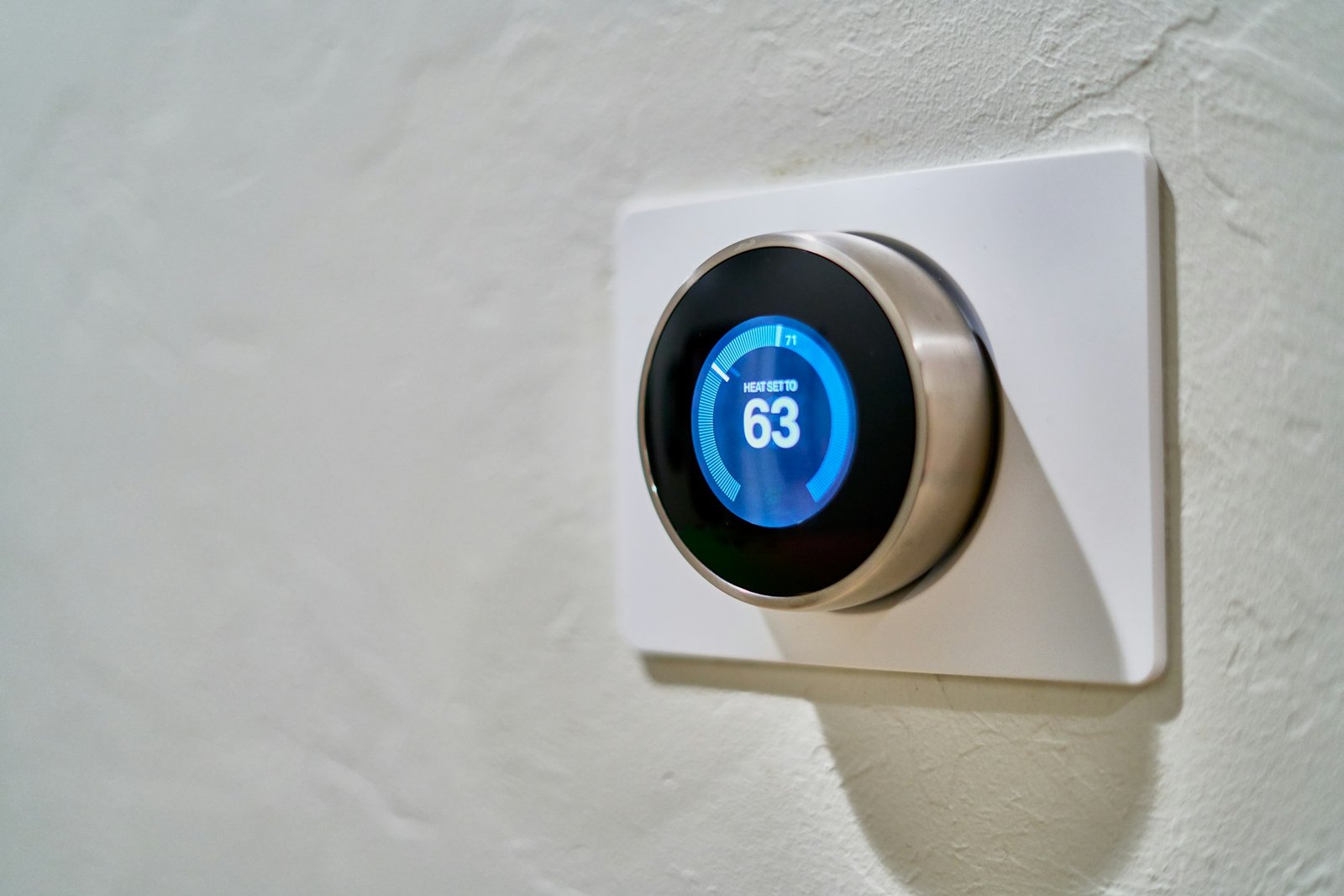
Remember when “smart home” just meant a programmable thermostat and a Wi-Fi light bulb you could turn purple for fun? That was home tech’s kindergarten phase. Since then we’ve grown into a more connected, if occasionally chaotic, adolescence\u2014a house full of devices that talk constantly but don’t always listen to each other, creating a kind of digital Tower of Babel in the living room.
But the next phase is arriving. We’re moving from a pile of smart devices toward a genuinely intelligent home ecosystem. The goal isn’t just remote control or voice commands anymore\u2014it’s a living space that’s aware of context, predictive, and quietly supportive. A home that doesn’t just react to commands, but understands your habits, anticipates what you need, and largely manages itself. Here’s how we got here, and where things are headed next.
From Novelty to Necessity: A Quick History
The smart home journey began with isolated pockets of convenience.
- The remote control era (Nest, early Philips Hue): Manual switches got replaced with app control. The value was convenience and modest energy savings.
- The voice assistant hub (Amazon Echo, Google Home): A central point for controlling scattered devices\u2014″Alexa, turn on the lights.” It simplified things but still needed explicit commands every time.
- The everything-gets-smart era: Fridges, ovens, doorbells, blinds\u2014all “smart” now. This created a new problem: fragmentation. Suddenly you needed five different apps, and your Google devices might not talk to your Apple-compatible lock.
That fragmentation exposed the real issue: we filled our homes with gadgets, not cohesive systems. The next stage fixes that by letting the technology fade into the background of a more intuitive experience.
What’s Coming Next: Five Pillars of the Intelligent Home
The home of the future won’t be defined by gadgets\u2014it’ll be defined by what it can do. Here’s what’s emerging.
1. A Real “Home OS” and True Interoperability
The real battle isn’t for your individual devices anymore\u2014it’s for your home’s operating system. Apple, Google, and Amazon are all competing, alongside the open-source Matter standard.
- Where things stand now: The Matter protocol is a big step forward\u2014a shared language that lets smart home devices talk to each other locally, without the cloud, regardless of brand. Think of it as USB-C for your home.
- What’s coming: Real intelligence needs a central brain. That’ll be a proper Home OS running on a powerful local hub (something like an Apple TV and HomePod combo, or a dedicated hub device). It’ll manage every device, run complex automations locally so your lights work even if the internet goes down, and give you one coherent interface. Your phone becomes a remote, not the command center.
2. Homes That Sense Context and Act Ahead of You
Forget manually programmed “if this, then that” rules. The next home reads context and acts before you ask.
- Where things stand now: Basic geofencing turns lights on when your phone arrives home.
- What’s coming: Multiple sensors working together at once:
- Presence sensors: Ultrasonic and radar sensors (like those in the Google Nest Hub) can detect where you’re standing in a room, not just whether you’re home.
- Biometric data: Pulled from wearables like an Apple Watch or Whoop. Your home could sense you’re stressed from an elevated heart rate and dim the lights, lower the thermostat, and play calming music as you walk in.
- Calendar and routine awareness: Knowing you have a video call at 3pm, so the office lighting gets optimized, doorbells get muted, and the door closes automatically.
- The result: Homes shift from command-and-response to ambient intelligence. You stop telling it what to do; it just does the right thing.
3. A Proactive Partner in Your Health and Wellness
The home is evolving from a place of convenience into a genuine partner in your well-being.
- Where things stand now: Air quality monitors (like Awair) and water leak sensors.
- What’s coming: Health monitoring woven directly into the home itself.
- Smart surfaces: Countertops or bathroom mirrors with built-in sensors could analyze a meal’s nutrition or scan your face for fatigue or dehydration, then suggest more water or an earlier bedtime.
- Better sleep: Beds like Eight Sleep already adjust temperature automatically. Future systems will sync with smart blinds to mimic a natural sunrise, mask outside noise, and analyze sleep stages through under-mattress sensors to wake you at the ideal moment within a window you choose.
- Elder care and safety: Advanced fall detection using radar (more privacy-friendly than cameras) that can alert family or emergency services if someone falls and doesn’t get back up.
4. Homes That Manage Their Own Energy
With rising energy costs and climate volatility, the home is becoming an active participant in managing power.
- Where things stand now: Smart thermostats, solar panels, home batteries like the Tesla Powerwall.
- What’s coming: An AI-powered home energy manager that:
- Forecasts: Uses weather data and your calendar to predict energy needs ahead of time.
- Optimizes: Automatically runs energy-hungry appliances\u2014EV charging, laundry\u2014during cheap, off-peak hours or when solar panels are producing extra.
- Trades: In some regions, sells excess stored battery energy back to the grid automatically when prices spike, turning your home into a tiny profit center. Companies like Span are already building the smart electrical panels that make this possible.
5. Robots Take On More of the Physical Work
Intelligence is taking on physical form inside the home.
- Where things stand now: Robot vacuums (Roomba) and mops.
- What’s coming: Specialized home robots handling more of the upkeep.
- Laundry bots: Robots that pick up dirty clothes, load them, and even fold them once clean. Companies like FoldiMate and GammaPi are working on this.
- Window and exterior maintenance: Small magnetic robots that clean exterior windows on their own, plus drones that inspect your roof for damage.
- A “digital butler” on wheels: A more realistic near-term step than a humanoid robot\u2014a wheeled tabletop device (think a more capable Amazon Astro) that can fetch things from another room, deliver a message, or patrol the house for anything unusual while you’re away.
The Non-Negotiable: Privacy and Security Built In
As homes get more perceptive, the stakes around privacy and security rise sharply. This next generation of technology needs to be built on:
- Local processing: Sensitive data\u2014presence, biometrics\u2014handled on your local Home OS hub, not shipped off to the cloud.
- Zero-trust design: Every device verified, with communication encrypted end to end.
- Clear user control: Simple dashboards showing exactly what’s being collected and how, with an easy way to pause sensing whenever you want.
Wrapping Up: A Home That Actually Cares
The rise of smart devices was about control. The future of home tech is about care. It’s shifting from a collection of remote-controlled gadgets to a unified, aware environment that manages its own energy, watches out for your health, maintains itself, and quietly adapts to support your daily life and long-term well-being.
The most successful home tech won’t be the version with the most features\u2014it’ll be the one you trust enough to forget is even there, quietly working to keep you comfortable, safe, and at ease. A truly intelligent home won’t feel like technology at all. It’ll just feel like home, done right.
FAQs
1. Won’t all of this be incredibly expensive\u2014just for wealthy people?
Like most technology, it’ll start at the top and filter down fast. Modularity and upgradability will be key\u2014you won’t need to buy a new house. You’ll upgrade your Home OS hub, your electrical panel, and add sensors or robots gradually, the way you’d upgrade a computer over time. The Matter protocol matters a lot here, since it protects your investment by making sure new devices work alongside older ones.
2. I’m uneasy about a home that’s constantly watching and listening to me. Is that a fair concern?
Yes, and it’s the central challenge of this whole shift. The answer lies in choosing ecosystems built around local processing with clear, accessible controls. Look for brands that are transparent about their data practices and let you easily disable sensors. The future needs to be “privacy by design,” where the home’s intelligence serves you rather than tracking you for someone else’s profit. This will likely become a major differentiator between brands.
3. What happens if my internet goes down\u2014does my house go dumb?
That’s a real flaw in today’s cloud-dependent systems. The next generation, built around a local Home OS and the Matter protocol, is designed to run locally. Your automations, schedules, and core controls live on a hub in your own home. You’ll still need internet for updates, complex voice queries, or remote access, but your lights, climate, and security should keep working regardless.
4. Will Apple, Google, and Amazon ecosystems ever actually work together?
The industry is at a turning point. Matter is essentially the peace treaty here, and most major players have signed on. That said, each company will keep adding exclusive features on top of the basic standard to keep you inside their particular Home OS. Baseline interoperability is better than it’s ever been, but for the smoothest experience you’ll probably still lean toward one main ecosystem. Fully walled gardens are likely on their way out, driven mostly by consumer demand.
5. What’s a good first step to prepare my home for all this?
First, future-proof your network: install a solid, meshed Wi-Fi 6/6E system (Eero, Orbi, Asus ZenWiFi) with strong coverage\u2014this is the backbone everything else relies on. Second, prioritize Matter-compatible devices for any new purchase\u2014lights, plugs, sensors\u2014to make sure they’ll work with whatever ecosystem wins out. Third, think in terms of a hub rather than individual gadgets. Look into where Apple Home (via HomePod/Apple TV) or Google Home (via Nest Hub) are headed, and pick whichever fits your existing devices and habits. Start small, but plan with the whole system in mind.