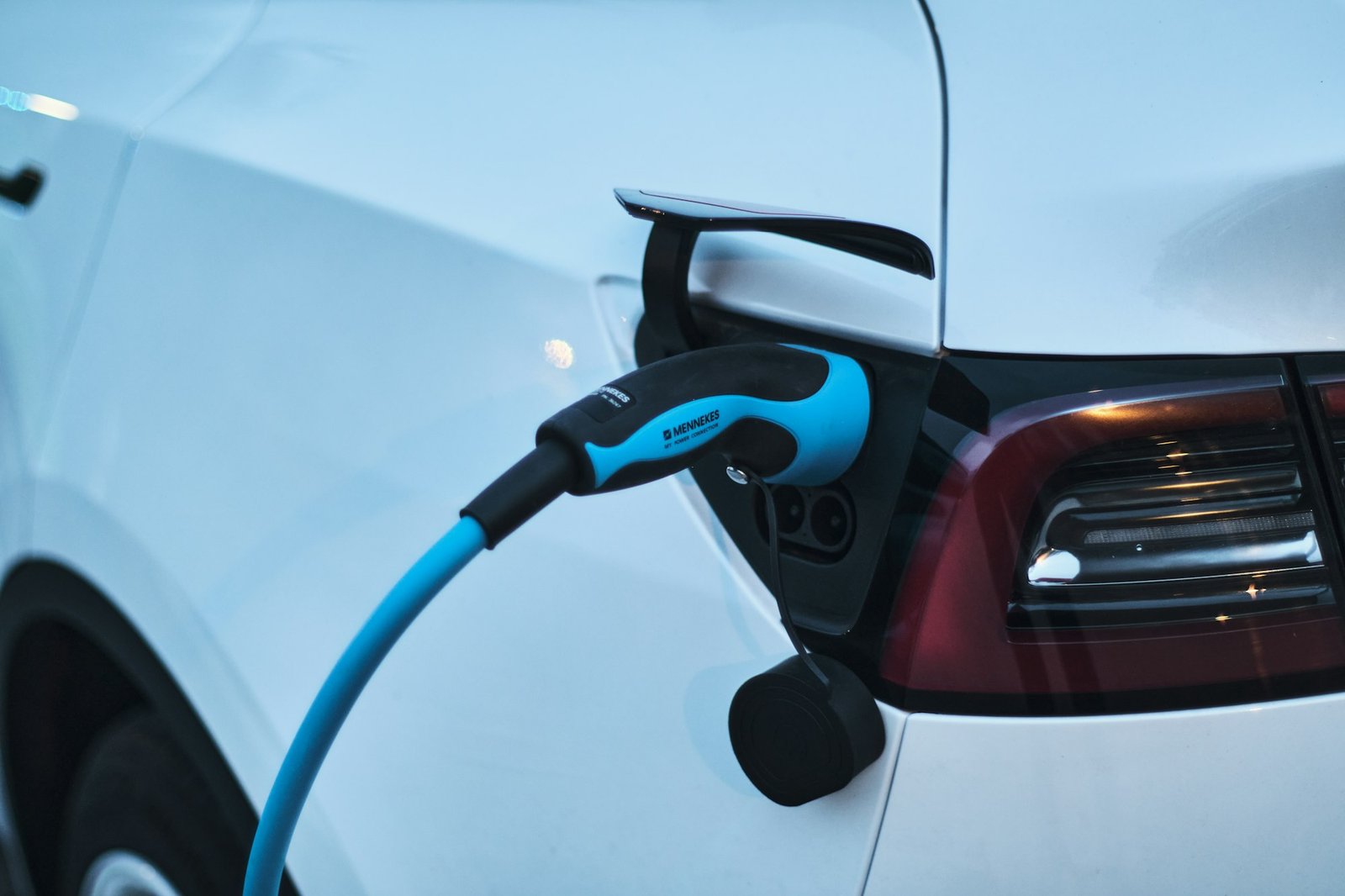
Look around\u2014it’s happening. That near-silent whoosh as a car pulls away from a stoplight. The distinctive front end of a new model with no grille. The growing rows of charging stations popping up at your local supermarket. Electric vehicles aren’t a quirky early-adopter niche anymore, or some distant promise of the future. They’re unmistakably, decisively taking over the roads. But why? Is it purely about being “green,” or is there something more compelling happening right under our wheels?
The shift from the familiar growl of an internal combustion engine to the quiet hum of an electric motor isn’t just a fuel change\u2014it’s a full transformation of the driving experience, driven by a convergence of technological progress, economic reality, and a real shift in what drivers actually want. Let’s plug in and look at what’s driving this shift.
This Isn’t a Trend\u2014It’s a Fundamental Shift
Let’s be clear upfront: this isn’t a passing fad like a new paint color or a flashy gadget. Moving to electric propulsion is a foundational change, similar in scale to the shift from horse-drawn carriages to automobiles over a century ago. We’re in the early stages of a full reimagining of personal transportation, and the momentum has become self-sustaining. The question has shifted from “if” to “how fast.”
Several Forces Converging at Once
Think of it like a rocket launch\u2014liftoff requires multiple stages igniting in sequence. The EV shift has had its own version of that:
- The initial spark: Early, expensive, limited-range models proved the basic idea worked.
- Sustained momentum: Tesla’s real achievement was making EVs desirable, fast, and genuinely connected.
- The main engines kicking in: Massive, multi-billion-dollar commitments from legacy automakers\u2014Volkswagen, Ford, General Motors, Hyundai, and others.
- Reaching orbital velocity: Widespread consumer acceptance, growing infrastructure, and supportive policy.
We’re now firmly in that last stage, with the trajectory largely set. Here’s a closer look at what’s actually driving the shift.
The Core Advantages of Driving Electric
The appeal of an EV isn’t one single feature\u2014it’s several benefits working together that make the old way of driving feel a bit dated by comparison.
1. A Genuinely Better Driving Experience
This is probably the most underrated reason behind the shift. Once you drive a well-made EV, going back is hard. Here’s why:
- Instant, silent torque: An electric motor delivers all its torque from zero RPM. Press the accelerator (it’s not really a “gas” pedal anymore) and the response is immediate, linear, and surprisingly forceful. No waiting for a transmission to downshift or a turbo to spool up\u2014it just goes. That makes city driving in particular feel effortless.
- Mechanical simplicity: An EV drivetrain has maybe 20 moving parts compared to hundreds in a combustion engine. Fewer parts mean less vibration, less noise, less to break, and a smoother ride overall. The cabin becomes a genuinely calm space, free of engine rumble and gear shifts.
- A packaging revolution: Without a massive engine block, transmission tunnel, or fuel tank, designers get to rethink the whole car. That leads to more spacious interiors (a front trunk, flatter floors) and more stable handling, since heavy batteries sit low in the chassis, giving the car a planted, confident feel.
2. The Economics Genuinely Work Out
For most people, money is the real deciding factor. The sticker price on an EV can still run higher (though that gap keeps shrinking), but the total cost of ownership often tells a different story.
- Fueling for far less: Electricity costs much less than gas per mile. Charging at home overnight on a low tariff can work out to roughly $1-2 per gallon equivalent. Even public fast-charging often beats a tank of gas.
- Dramatically lower maintenance: No oil changes, no spark plugs, no timing belts, no exhaust systems or complex transmissions to fail. Brake pads last much longer thanks to regenerative braking. That adds up to thousands saved over the life of the car, plus far fewer trips to the shop.
- Incentives sweeten the deal: Governments worldwide offer tax credits, rebates, and grants that lower the purchase price. Many cities add perks too\u2014free parking, bus lane access, exemption from congestion charges\u2014that add up over daily use.
3. A Genuinely Cleaner Way to Drive
This can’t be ignored\u2014it’s the foundational motivation for many early adopters and a big driver of policy support.
- Zero tailpipe emissions: EVs produce no carbon dioxide, nitrogen oxides, or particulates where they’re actually driven, which means noticeably better air quality in cities and fewer smog-related health issues.
- The grid keeps getting cleaner: The old critique\u2014″but your electricity comes from coal!”\u2014is becoming outdated. Power grids worldwide are decarbonizing quickly with more wind, solar, and renewables coming online. An EV gets cleaner as the grid does; a combustion car is permanently tied to burning fossil fuel.
- A real lifecycle advantage: Even factoring in battery manufacturing, numerous studies find EVs carry a smaller carbon footprint over their lifetime than conventional cars\u2014and that advantage keeps growing as battery recycling improves and power generation gets cleaner.
What’s Accelerating Adoption
The inherent advantages of EVs are strong on their own, but a few external forces have pushed adoption forward even faster in recent years.
Rapid Progress in Batteries, Software, and Charging
Technology is solving the early pain points at a genuinely fast pace.
- Battery improvements: Range anxiety is fading fast. New EVs routinely offer 250-350+ miles of range, covering the vast majority of everyday driving. Batteries are charging faster and lasting longer, and cost per kilowatt-hour has dropped sharply, making EVs more affordable overall.
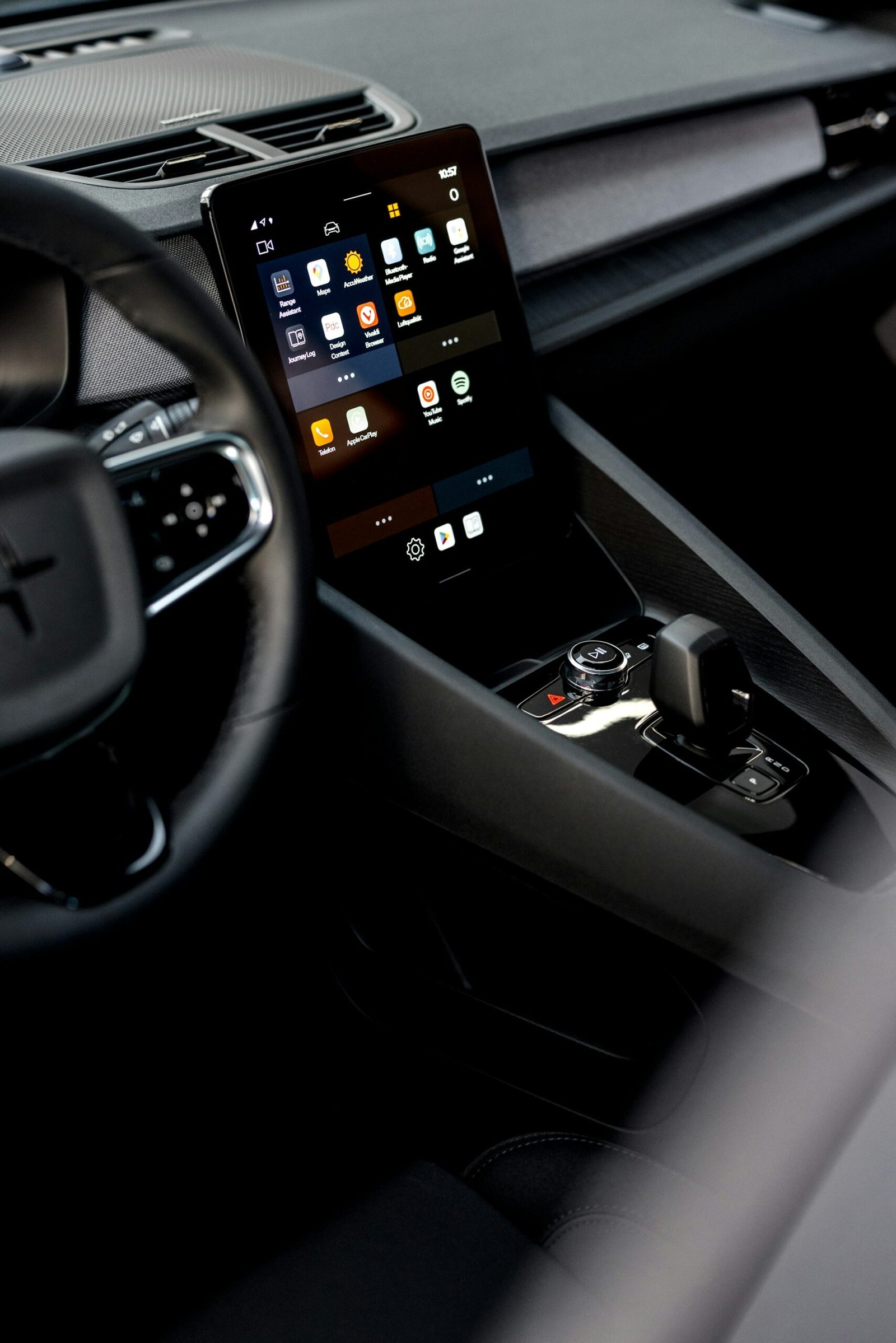
- The car as a computer: Modern EVs are software-defined vehicles, receiving over-the-air updates that can improve performance, add features, sharpen safety systems, and even extend range years after purchase. Your car improves with age, much like a smartphone\u2014something a traditional gas car simply can’t do.
- Charging networks expanding fast: Infrastructure is catching up quickly. Networks like Tesla’s Supercharger (now opening to other brands), Electrify America, and others are growing rapidly. For most owners, home charging remains the real game-changer\u2014waking up to a “full tank” every single morning.
The Auto Industry Is All In
This matters a lot. When giants like Ford, GM, and Volkswagen commit to going fully electric in Europe by 2035 and pour in hundreds of billions of dollars, that’s not a bet on a trend\u2014it’s a strategic acknowledgment of where things are heading. That commitment floods the market with real choice: electric pickups (Ford F-150 Lightning), SUVs (Hyundai Ioniq 5, Kia EV9), luxury sedans, and increasingly affordable models. Adoption tends to follow choice.
Public Perception Has Flipped
EVs, led largely by Tesla, are now seen as aspirational, high-tech, and genuinely fast\u2014not just eco-friendly. They’re viewed as some of the smartest, most innovative vehicles on the road today, and that cultural pull keeps drawing the market forward.
Real Challenges Still Worth Acknowledging
The shift isn’t instant or without friction, and understanding the full picture means acknowledging these hurdles too.
- Upfront cost: Even with total cost of ownership savings, the initial price remains a real barrier for many buyers, though competitive leasing and cheaper new models are chipping away at this.
- Uneven charging access: People without dedicated home parking\u2014apartment dwellers, city residents\u2014still face real logistical hurdles. More public and workplace charging is the clear solution here.
- Grid capacity: Widespread adoption needs a genuinely robust electrical grid, and upgrades plus smart charging technology are essential investments going forward.
- Raw materials: Scaling battery production requires mining lithium and cobalt, which raises real ethical and environmental questions the industry needs to keep addressing responsibly.
None of these are true dead-ends\u2014they’re engineering and infrastructure problems with active, well-funded work already underway. They slow the transition down, but they don’t stop it.
What an EV-Dominant Future Might Look Like
Picture a world where EVs are simply the norm. The benefits start compounding:
- Quieter, cleaner cities: Urban centers become dramatically less noisy and polluted.
- Greater energy independence: Nations power transportation with domestically produced electricity\u2014renewables, nuclear\u2014rather than imported oil.
- Vehicle-to-grid potential: A parked EV could act as a home battery backup during an outage, or even help stabilize the broader power grid, turning what’s usually a cost into an asset.
- More design freedom: Without the constraints of a traditional powertrain, car design has room to evolve in genuinely new directions.
Wrapping Up: An Inevitable Shift
So why exactly are electric cars taking over? It’s not one single reason\u2014it’s a real convergence. They offer a genuinely better, simpler, more enjoyable driving experience. They make solid economic sense over time. They offer a clear path toward a cleaner environment. And they’re now backed by the full weight of global industry and technological progress.
The combustion engine had an impressive, century-long run. But at its core, it’s a complex, inefficient, polluting way to move a person a short distance. The electric motor, in its relative simplicity, is the logical successor. This shift is happening because, in the end, EVs are simply a better tool for the job. The road ahead is electric, and it’s not just a different route\u2014it’s a better one.
FAQs
1. I live in an apartment with no charging spot\u2014is an EV even practical for me?
A very common and fair concern. Home charging is a big perk, but it’s not an absolute requirement for everyone. It really depends on your routine. If you have reliable fast charging at work, or a convenient charger near somewhere you regularly spend an hour anyway (a gym, a supermarket), it can work smoothly. Public charging networks are also expanding fast in cities specifically for this situation. It takes more planning than home charging, but it’s increasingly workable.
2. Are EV batteries really that harmful to the environment when they’re made and eventually discarded?
A fair question. Yes, manufacturing an EV battery carries a higher upfront environmental cost than building an engine. But numerous lifecycle studies show that within 1-2 years of driving (depending on how clean the local grid is), an EV “pays off” that carbon debt and becomes cleaner overall. As for disposal, batteries generally aren’t thrown away\u2014a growing recycling industry is scaling up to recover over 95% of key materials like lithium, cobalt, and nickel for new batteries, creating a circular system that reduces the need for new mining.
3. Can the power grid actually handle everyone switching to EVs?
It’s a manageable challenge, not a looming crisis. The grid will need to evolve, but the shift is happening gradually over decades. Most EV charging happens overnight during off-peak hours, when demand is low and there’s plenty of spare capacity. Smart charging can even help balance the grid by timing charges around renewable generation. Utilities generally see EVs as a manageable new load, and potentially even an asset for grid stability.
4. Are EVs really more expensive to insure?
Right now, sometimes yes, though the picture is complicated and changing. Higher repair costs for advanced tech and expensive battery packs have pushed premiums up in some cases. But as EVs become more common, repair shops get more experienced with them, and strong safety data accumulates (EVs often score very well on safety), insurance costs are expected to normalize\u2014and could eventually drop given fewer mechanical failure claims overall.
5. What about long road trips\u2014are they a hassle in an EV?
This used to be a major sticking point, but it keeps getting easier. Modern EVs with 300-plus miles of range can easily cover 2-3 hours of highway driving between charges. Trip planning just means using an app to find fast chargers along your route, usually near amenities. Charging from 10% to 80% on the fastest chargers now takes about 20-30 minutes\u2014a reasonable break for coffee, a snack, and a bathroom stop. It’s a different rhythm than a five-minute gas stop, but for many drivers it actually makes for a more relaxed, safer trip.